What is the clinical application of monoclonal antibodies?
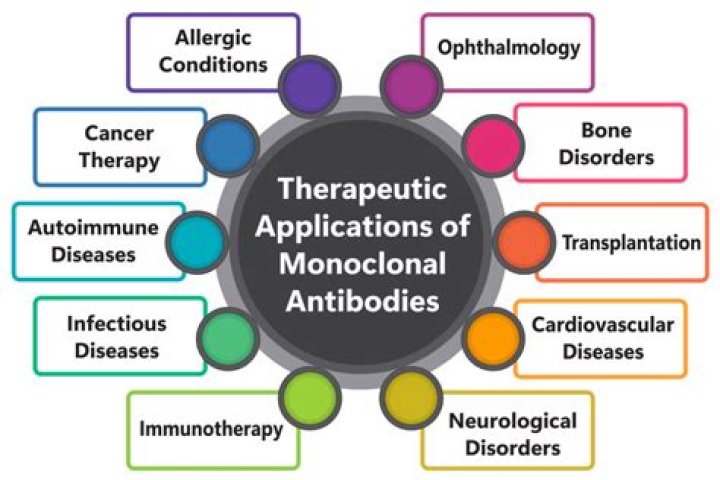
Monoclonal antibodies have become valuable tools for the precise clinical manipulation of the immune system. These highly specific proteins have proven their usefulness in both the treatment and prevention of organ transplant rejection.
What are the uses of monoclonal antibodies in disease treatment?
Monoclonal antibodies are laboratory-produced molecules engineered to serve as substitute antibodies that can restore, enhance, modify or mimic the immune system’s attack on cells that aren’t wanted, such as cancer cells.
When are monoclonal antibodies used?
Monoclonal antibodies are intended for patients recently diagnosed as having COVID-19 who are not sick enough to be in the hospital but who have some risk factors for severe infection.
What is a MAB drug?
Monoclonal antibodies (MABs) are a type of targeted drug therapy. These drugs recognise and find specific proteins on cancer cells. There are many different MABs to treat cancer.
What do we get when we fuse spleen cells and myeloma cells?
Fusing antibody-producing spleen cells, which have a limited life span, with cells derived from an immortal tumor of lymphocytes (myeloma) results in a hybridoma that is capable of unlimited growth.
What are some applications of monoclonal antibodies?
Monoclonal antibodies may have a number of promising potential therapeutic applications in the treatment of asthma, autoimmune diseases, cancer, poisoning, septicemia, substance abuse, viral infections, and other diseases.
What are the benefits of monoclonal antibodies for COVID-19?
The answers are relatively simple: monoclonal antibodies are man-made proteins that can help your body fight off COVID-19 and reduce the risk of severe disease and hospitalization—if administered to high-risk patients soon after diagnosis.
What is an example of monoclonal antibody?
Examples of naked monoclonal antibodies include alemtuzumab (Campath, Genzyme) for the treatment of chronic lymphocytic leukemia, and trastuzumab (Herceptin, Genentech) for the treatment of stomach and breast cancers that contain the HER-2 protein.
Why do medicines end in mAb?
The suffix “-mab” is used for monoclonal antibodies, antibody fragments and radiolabeled antibodies. For polyclonal mixtures of antibodies, “-pab” is used. The -pab suffix applies to polyclonal pools of recombinant monoclonal antibodies, as opposed to polyclonal antibody preparations isolated from blood.
What are the benefits of monoclonal antibodies for Covid 19?
Why are myeloma cells used in monoclonal antibodies?
The myeloma cell line that is used in this process is selected for its ability to grow in tissue culture and for an absence of antibody synthesis.
What is the purpose of using myeloma cells in monoclonal antibody production?
A typical monoclonal antibody production process Preparation of myeloma cells – Myeloma cells are immortalized cells that, once fused with spleen cells, can result in hybridoma capable of unlimited growth.
What are the problems with monoclonal therapy?
Infusion reactions. Severe allergy-like reactions can occur and,in very few cases,lead to death.
What is in monoclonal therapy?
How does monoclonal antibody therapy work? Dr. Huang: Monoclonal antibody ( mAb ) therapy, also called monoclonal antibody infusion treatment, is a way of treating COVID-19. The goal of this therapy is to help prevent hospitalizations, reduce viral loads and lessen symptom severity. This type of therapy relies on monoclonal antibodies.
What does monoclonal mean?
monoclonal antibody, monoclonal(adj) any of a class of antibodies produced in the laboratory by a single clone of cells or a cell line and consisting of identical antibody molecules. monoclonal(adj) forming or derived from a single clone.
What is mono antibodies?
Mononucleosis tests are blood tests to look for antibodies that indicate mononucleosis (mono), which is usually caused by the Epstein-Barr virus (EBV). The antibodies are made by the immune system to fight an infection.