What is Paraurethral cyst?
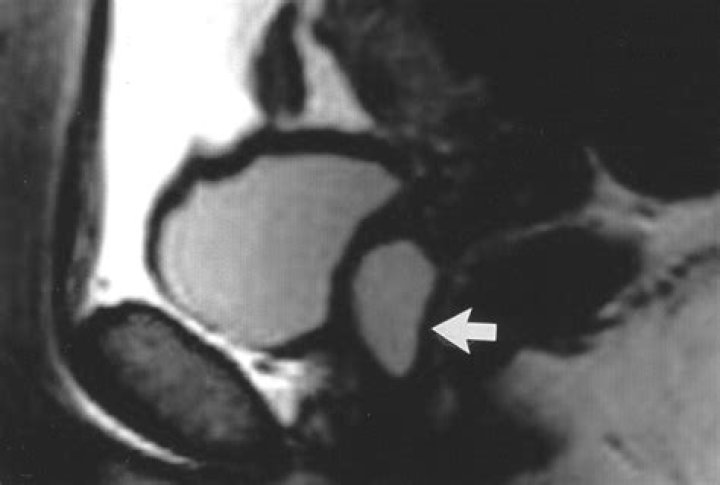
Paraurethral Cyst Paraurethral cysts, also known as Skene’s glands, are found in the wall of the vagina near the urethra. In a newborn, Skene’s duct can become blocked by a large cyst filled with hormone secretions. Sometimes the cyst may close off the urethral opening.
What causes Paraurethral cyst?
Congenital paraurethral cysts arise from the various embryological components and genitourinary remnants. Acquired inclusion cysts of the surface epithelium are generally secondary to the trauma of childbirth or are caused by iatrogenic surgical trauma.
What is Mullerian cyst?
A Müllerian cyst is a recently defined rare benign tumor of the posterior mediastinum. It is necessary to distinguish it from neurogenic tumor or bronchogenic cyst arising in the posterior mediastinum. Herein, we have reported and reviewed a case of Müllerian cyst in the light of the existing literature.
What is Gartner cyst?
Gartner cyst is usually an asymptomatic vaginal cyst, measuring less than 2 cm, frequently found during a routine gynaecological examination. Very rarely, as these cysts are closed structures, they may increase in size because of mucus production.
What do Paraurethral glands secrete?
Paraurethral glands (or Skene glands) lie within the wall of the distal female urethra and secrete mucus during sexual activity. Each gland is drained by a single paraurethral (Skene) duct. They are homologous to the male prostate gland.
Do Paraurethral cysts go away on their own?
Paraurethral Cyst Paraurethral cysts don’t need to be treated if there are no symptoms. Most often, these pop and shrink on their own. But if there’s a block, infection, or if pain occurs, your urologist may pierce the cyst with a scalpel blade to drain it and ease the symptoms.
What is Paramesonephric duct?
Paramesonephric ducts (or Müllerian ducts) are paired ducts of the embryo that run down the lateral sides of the urogenital ridge and terminate at the sinus tubercle in the primitive urogenital sinus. In the female, they will develop to form the fallopian tubes, uterus, cervix, and the upper one-third of the vagina.
What causes an epidermal inclusion cyst?
Epidermal inclusion cysts form when the follicular infundibulum is disrupted, or when the surface of the skin becomes implanted below the skin through an injury or trauma in the area, such as a scratch, surgical wound or a skin condition like acne.
Where is Gartner cyst?
True Gartner’s duct cysts are typically located along the anterolateral wall of the proximal third of the vagina. In contrast, Bartholin’s cysts are typically located in the posterolateral wall of the lower third of the vagina and are associated with the labia majora [1, 5].
What causes Gartner cyst?
These may form due to injury to the vaginal walls during birth process or after surgery. Gartner duct cysts develop on the side walls of the vagina. Gartner duct is present while a baby is developing in the womb. However, this most often disappears after birth.
What does a prostate do?
The prostate produces a fluid that mixes with sperm (from the testicles) to make semen. The fluid is kept in a tube-shaped gland that sits behind the bladder. This gland is called the seminal vesicle. During sex, the muscle tissue helps force (ejaculate) prostate fluid and sperm into the urethra.
What is a paraurethral cyst?
Paraurethral duct cysts are retention cysts that form secondary to inflammatory obstruction of the paraurethral (Skene) ducts in females. The cysts are lined by stratified squamous epithelium due to their origin from the urogenital sinus. Usually asymptomatic.
Is periurethral cyst benign or malignant?
Paraurethral cyst is a benign ditzel of gynecologic pathology . Skene gland cyst, Skene duct cyst and periurethral cyst direct to this article.
What are the different types of cysts in gynecologic pathology?
Paraurethral cyst is a benign ditzel of gynecologic pathology . Skene gland cyst, Skene duct cyst and periurethral cyst direct to this article. Rare. Benign. Presentation: mass lesion, dyspareunia or dysuria. Multipareous. Cystic space with epithelial lining – diagnosis based on epithelial lining. Epithelial inclusion cyst. Müllerian cyst.
Is the paraurethral gland in the plain viscacha a prostate?
The Skene’s (paraurethral) gland is the histologic homologue to the male prostate. Much experimental work has been done on women and on various rodents. In this study we describe for the first time the anatomical and histological characteristics of the paraurethral gland in the plain viscacha (Lagostomus maximus maximus).


