What is normal angiography?
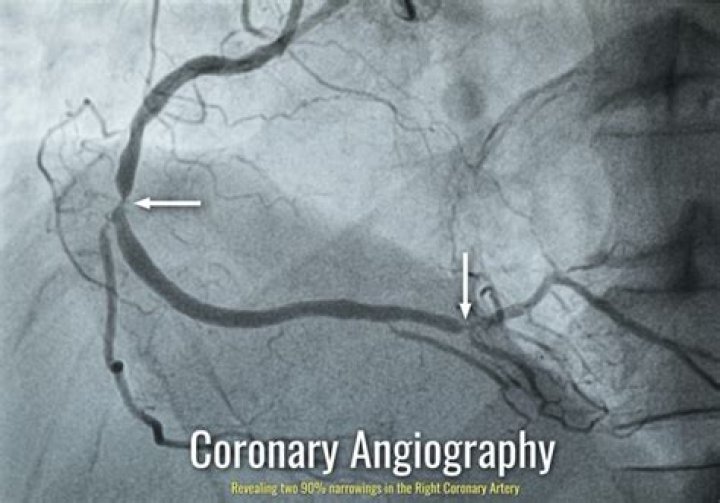
Normal coronary angiography was defined as angiographic findings with stenosis <20% in all vessels. The rate of normal coronaries at Veterans Affairs (VA) hospitals ranged from 5.5% to 48.5%.
What is an angio lab?
Angiography or arteriography is a medical imaging technique used to visualize the inside, or lumen, of blood vessels and organs of the body, with particular interest in the arteries, veins, and the heart chambers.
Are heart catheterizations accurate?
Diagnostic predictions employing combined clinical and noninvasive cardiac evaluation were completely correct in 86% of patients, and management strategy was correct in 97% of individuals. In approximately one-half of all patients full cardiac catheterization or coronary arteriography was recommended.
Why angiography is needed?
Why do we do an angiogram? When blood vessels are blocked, damaged or abnormal in any way, chest pain, heart attack, stroke, or other problems may occur. Angiography helps your physician determine the source of the problem and the extent of damage to the blood vessel segments that are being examined.
How serious is an angiogram?
Angiograms are generally safe, complications occur less than 1% of the time. However, there are risks with any test. Bleeding, infection, and irregular heartbeat can occur. More serious complications, such as heart attack, stroke, and death can occur, but they are uncommon.
What is Angio?
Angio- is a combining form used like a prefix meaning “vessel” or “container.” It is used in medical and scientific terms. In anatomy, angio- specifically refers to blood and lymphatic vessels.
How safe is angioplasty?
Angioplasty is generally safe, but ask your doctor about the possible complications. Risks of angioplasty and stent placement are: Allergic reaction to the drug used in a drug-eluting stent, the stent material (very rare), or the x-ray dye. Bleeding or clotting in the area where the catheter was inserted.
What is Rao Lao?
LAO refers to rotating the camera to the patient’s left (catheter and spine will be on the right side of the image), RAO to the patient’s right (catheter and spine on the left side of the image). Angulation describes the position of the image intensifier in the short axis of the patient.
How long does it take for artery to heal after heart cath?
Complete recovery takes a week or less. Keep the area where the catheter was inserted dry for 24 to 48 hours. If the catheter was inserted into your arm, recovery is often faster.
Is Angio safe?
What does Angio mean in medical terms?
What is nexaris angio-CT first?
Nexaris Angio-CT First hybrid suite that seamlessly combines angiography, CT and wireless-ultrasound – CT and angiography images are now seamlessly integrated and instantly fused together. Nexaris Therapy Suites
Why choose Artis interventional angiography systems?
Artis Interventional Angiography Systems With our Artis products we offer a broad portfolio of systems for interventional imaging to cover all clinical needs in radiology, cardiology and surgery. Prev
Do you need blood work for an angiogram?
In almost all cases, laboratory tests (“blood work”) will be needed, and your physician will need to study the results before beginning your angiogram. It may be several hours before the laboratory results are available. Every effort will be made to perform your test at the scheduled time, but delays do occur.
How long does it take to get an angiogram?
During the Angiogram 1 You will be asked to change into a hospital gown. 2 The test itself will take approximately 2 to 3 hours. 3 During an angiogram, a long slender tube called a catheter is inserted into a large artery (generally, in the groin area).


